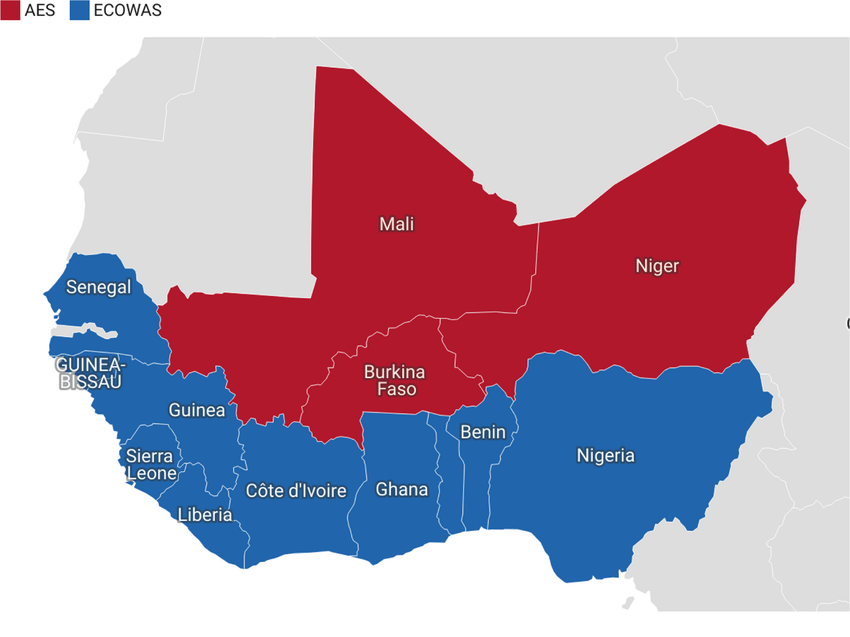
The tenure of Ambassador Musa Sani Nuhu as Nigeria’s Permanent Representative to the Economic Community of West African States (ECOWAS) coincided with one of the most unsettled chapters in the region’s modern diplomatic history. It was a period marked not by institutional expansion or celebratory milestones, but by strain: a global pandemic, a wave of military takeovers across the Sahel, deepening distrust among member states, and the unprecedented announcement by Mali, Burkina Faso, and Niger of their intention to withdraw from ECOWAS. In assessing his contribution, the question is not whether events were dramatic but whether his stewardship left structural imprints that outlasted the turbulence.
Ambassador Nuhu’s approach appears to have been shaped more by administrative architecture than by grand gestures. Upon assuming office in early 2020, he encountered what was described as a lean or “smart” Nigerian mission: functional, but thinly structured for a country that remains ECOWAS’s largest financial contributor and political anchor. His decision to reorganise the mission into thematic clusters corresponding to the Commission’s directorates reflected a bureaucratic realism often overlooked in discussions of diplomacy. Regional influence is rarely secured in summit halls alone; it is constructed through technical working groups, budgetary oversight, committee deliberations, and procedural continuity. By aligning Nigeria’s mission structure to the institutional map of ECOWAS, he sought to ensure that Nigeria's engagement was no longer random or reactive but systematic.
Whether this structural strengthening translated into greater political leverage is more difficult to measure. Institutional coherence does not automatically produce geopolitical consensus. Yet it creates the conditions for sustained engagement. In that respect, the transformation of Nigeria’s mission was not cosmetic. It signalled an understanding that regional-level diplomacy is an ongoing administrative exercise rather than an occasional ceremonial duty.
His tenure was almost immediately tested by the COVID-19 pandemic. Regional organisations often falter in crisis, their mandates blurred by emergency. The activation of ECOWARN in Abuja and the facilitation of food assistance from ECOWAS reserves to Nigeria demonstrated operational continuity under pressure. These actions were not transformative in themselves, but they reflected an insistence that ECOWAS remain functionally relevant during a period when borders closed, and governments turned inward. In a region where scepticism about multilateral institutions can run deep, maintaining relevance during a crisis may be as important as designing new frameworks.
The defining test, however, was the Sahel political crisis. Military transitions in Mali, Burkina Faso, and Niger challenged ECOWAS’s normative framework on constitutional order. As Chair of the Mediation and Security Council at the ambassadorial level, Ambassador Nuhu presided over deliberations aimed at balancing the enforcement of democratic norms with the preservation of regional cohesion. Sanctions were debated. Transitional timelines were negotiated. The eventual announcement by the three states of their withdrawal from ECOWAS exposed the fragility of the regional compact.
In moments like these, diplomacy is measured not only by outcomes but by process. The convening of the Lagos retreat to examine the implications of withdrawal suggested recognition that reactive measures alone would not suffice. Extended timelines and continued engagement channels were adopted. Yet the larger question remains unresolved: did these measures restore trust, or merely manage a controlled fracture? The departure announcement itself cannot be ignored. ECOWAS, under collective leadership, was unable to prevent it. But neither did the institution collapse in its wake. Deliberative mechanisms continued. Dialogue channels remained open. Institutional processes did not disintegrate.
One of the more consequential institutional developments during his tenure was the formalisation of joint consultations between ECOWAS and the African Union’s Peace and Security Council. Coordination gaps between continental and regional bodies have long complicated crisis response. By co-chairing and institutionalising recurring consultations, Ambassador Nuhu helped embed a framework to clarify the concepts of subsidiarity and complementarity in peace and security matters. This was not dramatic diplomacy; it was bureaucratic statecraft. Its impact will likely be judged not by immediate headlines but by whether future crises are managed with clearer coordination between Addis Ababa and Abuja.
His involvement in ECOWAS institutional reform, particularly discussions that led to a reduction in the number of commissioners and the strengthening of oversight roles, also reflects a preference for structural adjustment over symbolic positioning. Streamlining supranational institutions is politically delicate. Member states are protective of representation. Yet bloated structures can undermine efficiency and fiscal credibility. The recalibration of administrative architecture, coupled with Nigeria’s facilitation of a substantial payment toward its Community Levy obligations, restored a measure of financial authority to Abuja’s voice within the bloc. Financial credibility in multilateral settings is not merely technical; it underwrites moral standing.
Still, institutional reform alone cannot heal ideological divergence. The Sahel crisis revealed deeper fractures about sovereignty, security partnerships, and perceptions of external influence. No ambassador, however diligent, can singlehandedly reconcile those tensions. Diplomacy operates within the constraints of national politics. Nigeria’s own domestic challenges inevitably shape its regional posture. Ambassador Nuhu’s tenure demonstrated administrative steadiness, but the broader regional currents were shaped by forces beyond any single mission.
His engagement with economic integration initiatives, including inspection of the Seme-Badagry corridor and attention to trade bottlenecks, reflected an awareness that integration is experienced at border posts as much as in treaties. ECOWAS’s credibility depends on whether ordinary citizens perceive benefits in mobility and commerce. Addressing illegal checkpoints and advocating cross-border facilitation touches the practical core of integration. Yet sustained reform requires enforcement continuity; episodic attention is insufficient. The tension between ambition and implementation remains a regional challenge.
Observers of his diplomatic style often point to consultation rather than confrontation. In a bloc where Nigeria’s size can generate suspicion, consensus-building may be strategically prudent. However, consultative diplomacy also risks appearing cautious at moments when normative clarity is demanded. Whether strategic patience was the optimal approach during the Sahel upheaval will remain a matter of debate among scholars and policymakers. Some will argue that firmer enforcement might have deterred withdrawal. Others will contend that preserving channels of dialogue prevented permanent rupture.
What emerges from his tenure is less a portrait of flamboyant leadership and more one of institutional stewardship. He served on committees, chaired deliberations, presided over procedural matters, and participated in embedding mechanisms. His imprint lies in structure rather than spectacle. That distinction matters. Regional organisations rarely endure because of singular personalities; they endure because of durable processes.
If one expects diplomacy to resolve geopolitical fragmentation decisively, the record may appear inconclusive. The Sahel remains unsettled. ECOWAS continues to grapple with questions of legitimacy and cohesion. But if one measures diplomacy by whether institutions were stabilised during stress and whether procedural frameworks were strengthened for future resilience, the assessment shifts. His tenure did not reverse the tide of political upheaval, but neither did it allow institutional paralysis.
History tends to judge regional diplomats less by applause and more by the quiet durability of systems they help maintain. Ambassador Musa Sani Nuhu’s tenure may ultimately be remembered not for dramatic breakthroughs but for measured containment, structural adjustment, and the preservation of multilateral continuity amid profound uncertainty. In West Africa’s evolving political landscape, continuity itself may be an underappreciated form of leadership.
Written by Gandepuun Tyolumun